
A practical guide to #20 and #30 chunky zippers, real dimensions, custom colors, oversized pullers and OEM production.
For years, zippers were designed to blend into garments.
Today, some designers want exactly the opposite.
Oversized resin zippers turn a functional closure into a visible design feature. With larger teeth, bold colors and distinctive pullers, they can help define the character of hoodies, jackets, streetwear collections and experimental fashion pieces.
But choosing an oversized zipper involves more than selecting a dramatic appearance.
How wide are the teeth? How much fabric space does the zipper require? Which puller design works best? And can a prototype be reproduced consistently for bulk production?
At YGZIP, we approach these questions from a zipper manufacturer’s perspective.
This guide explores the design possibilities and practical specifications of #20 and #30 oversized molded plastic zippers, using real product samples and dimensional measurements.
1. What Is an Oversized Resin Zipper?
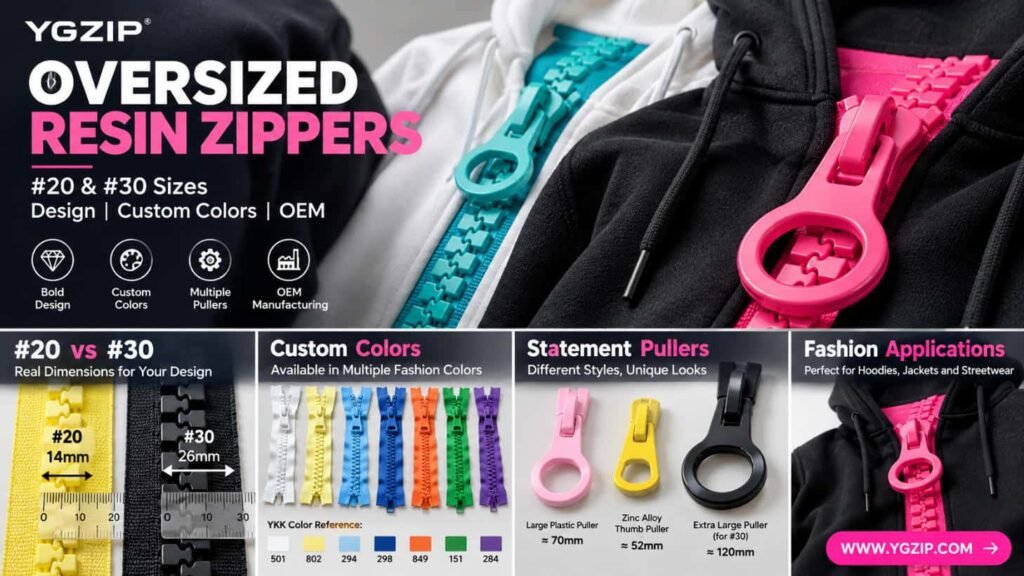
An oversized resin zipper, also known as a chunky plastic zipper or oversized molded zipper, uses substantially larger molded plastic elements than conventional garment zippers.
Unlike a standard zipper that primarily serves as a fastening component, an oversized zipper can become a central visual element.
Its distinctive features include:
- Large, visibly molded zipper teeth
- Wider zipper tapes
- Oversized or custom-shaped pullers
- Bold color combinations
- A prominent, architectural appearance
These characteristics make oversized zippers particularly interesting for fashion designers looking to introduce strong visual details without relying entirely on prints, embroidery or additional accessories.
However, size alone does not determine suitability. The zipper must also match the garment construction, intended use and required performance.
2. #20 vs. #30 Oversized Zippers: Real Measurements
One of the first questions designers ask is:
How big is a #20 or #30 zipper in real life?
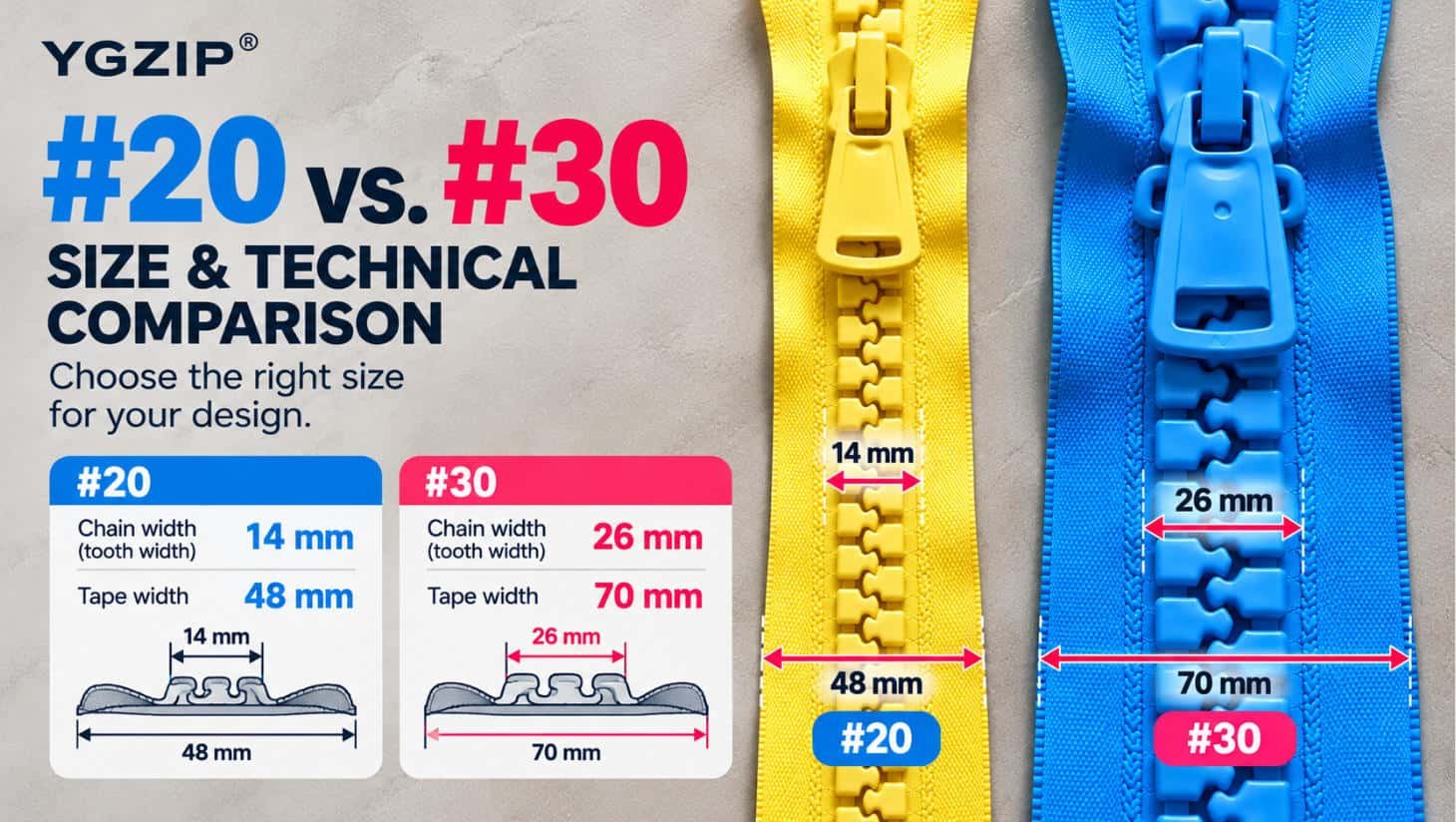
Rather than relying on generic descriptions, we measured actual oversized zipper samples.
| Specification | #20 Resin Zipper | #30 Resin Zipper |
|---|---|---|
| Approximate chain width | 14 mm | 26 mm |
| Approximate overall tape width | 48 mm | 70 mm |
| Puller assembly examples | 52–70 mm | 120 mm |
| Available sample designs | Standard and statement pullers | Extra-large statement puller |
| Visual appearance | Bold and versatile | Extremely prominent |
| Typical design consideration | Statement garment closures | Dramatic oversized detailing |
Measurements refer to the illustrated YGZIP samples. Dimensions may vary by zipper construction and tooling. Final production specifications should be confirmed against approved samples.
Why these measurements matter
A larger zipper affects more than appearance.
Garment pattern allowance: Wider zipper tapes require sufficient room for stitching and seam construction.
Visual proportions: A 26 mm chain can dominate the front of a garment much more strongly than a 14 mm chain.
Puller ergonomics: A larger puller can be easier to grasp, but its weight, movement and compatibility with the garment must be considered.
Material compatibility: Fabric weight, flexibility and reinforcement should be evaluated before selecting a large zipper.
For designers developing an oversized zipper garment, we recommend reviewing physical samples before finalizing patterns.
Explore our detailed guide: #20 vs. #30 Oversized Zippers — Dimensions, Design and Selection.
3. Why Chunky Zippers Work in Hoodie and Streetwear Design
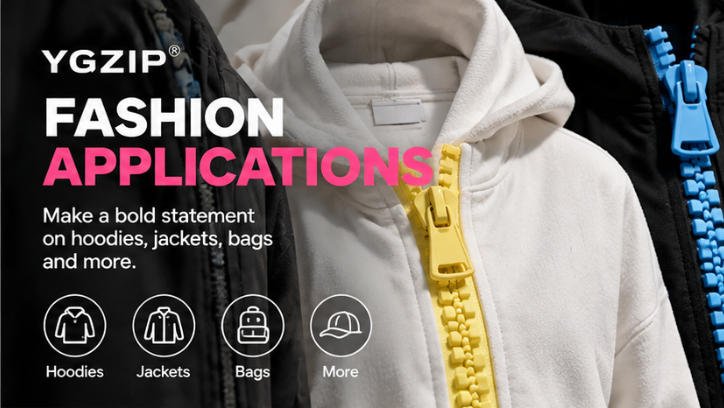
An oversized zipper can change the visual language of an otherwise simple garment.
Consider a plain hoodie.
A conventional zipper creates a relatively subtle closure. Replacing it with a brightly colored #20 molded zipper creates a contrasting vertical feature that becomes part of the design itself.
Possible applications include:
Statement Hoodies
Use a chunky zipper as the main front closure, especially when the garment features oversized silhouettes, heavyweight fabric or contrasting colors.
Fashion Jackets
An oversized zipper can complement structured panels, exaggerated pockets and bold garment proportions.
Streetwear Collections
Bright zipper colors and unusual puller shapes can create a recognizable design signature across multiple garments.
Costume and Experimental Fashion
For creative garments where visual impact is a priority, oversized teeth and sculptural pullers provide additional design possibilities.
The important distinction is that these are potential design applications, not universal performance recommendations.
Garment designers should evaluate zipper weight, flexibility, attachment methods and durability for each application.
Read more: Chunky Hoodie Zippers — Design Ideas and Practical Considerations.
4. Custom Colors: Turn a Zipper into a Design Signature
A chunky zipper attracts attention.
That makes color selection particularly important.
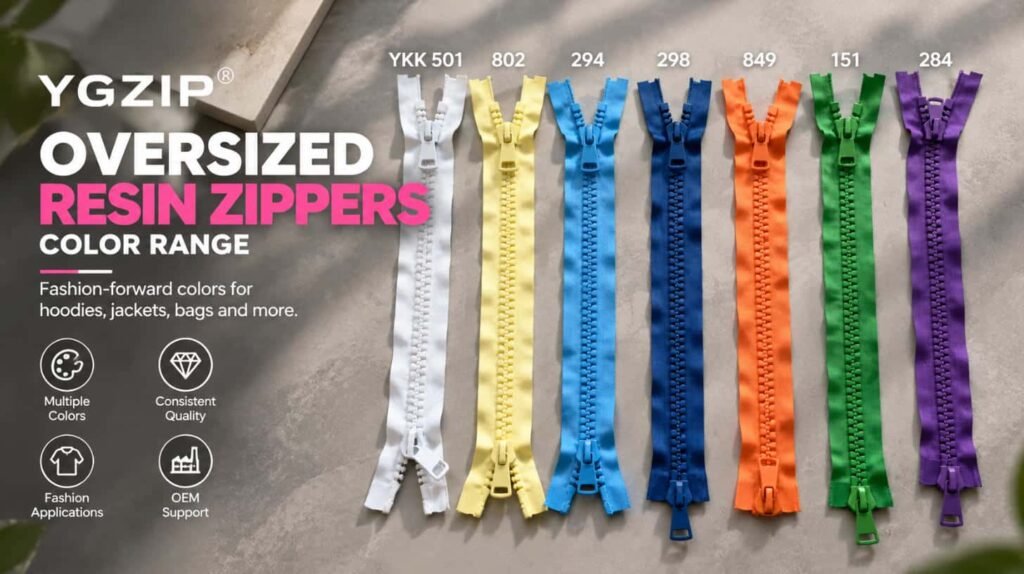
At YGZIP, we have developed #20 oversized zipper samples in several colors referenced against YKK color codes:
| Reference | Sample Color |
|---|---|
| YKK 501 | White |
| YKK 802 | Light yellow |
| YKK 294 | Light blue |
| YKK 298 | Deep blue |
| YKK 849 | Orange |
| YKK 151 | Green |
| YKK 284 | Purple |
These physical samples demonstrate how the same zipper construction can create very different visual effects.
A white zipper may work well with minimalist garments.
A bright orange or blue zipper can create contrast against neutral fabrics.
A color-matched zipper can produce a more integrated appearance while retaining the distinctive oversized teeth.
For custom projects, designers can submit Pantone references or approved color samples for feasibility evaluation.
Final color approval should be based on physical production samples rather than screen images alone.
Beyond zipper color
A coordinated zipper design may involve matching or contrasting:
- Molded zipper elements
- Woven zipper tape
- Slider body
- Puller
- Garment fabric
The available combinations depend on tooling, materials and production quantities.
Explore: Custom Color Oversized Zippers and Statement Puller Designs.
5. The Puller Is Part of the Design
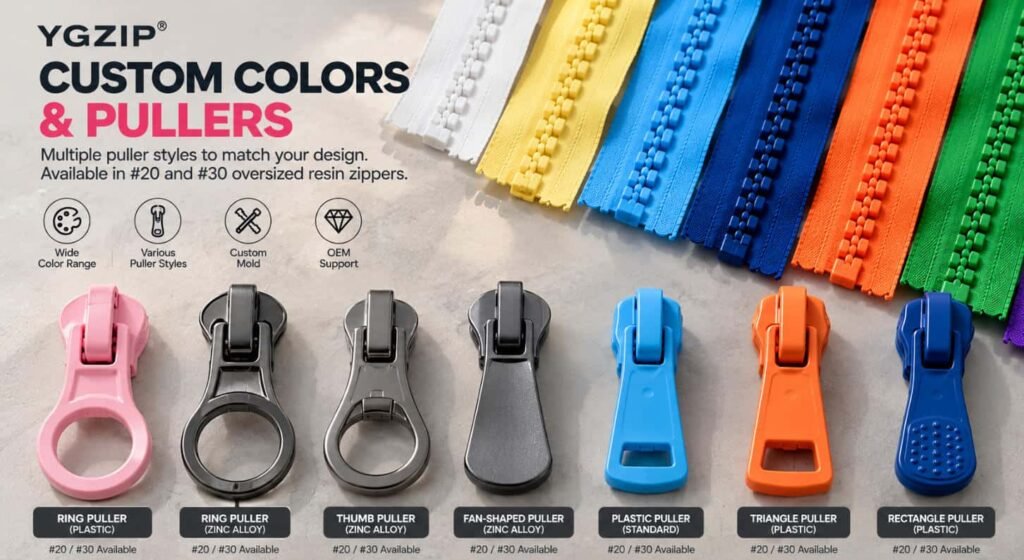
On a conventional zipper, the puller is often a minor detail.
On an oversized zipper, it can become a focal point.
Our current sample collection illustrates several possibilities.
Standard Oversized Puller
A relatively simple design that maintains the zipper’s bold appearance without adding unnecessary complexity.
Extra-Large Plastic Puller
Our #20 sample includes a plastic puller assembly measuring approximately 70 mm in length.
This provides a strong visual element suitable for statement design concepts.
Zinc-Alloy Thumb Puller
A #20 sample features a zinc-alloy thumb-style puller measuring approximately 52 mm.
This offers a different appearance and material feel compared with molded plastic designs.
Extra-Large #30 Puller
Our #30 sample features a large plastic puller assembly measuring approximately 120 mm.
Its scale creates a striking design feature.
For OEM projects, the puller should be evaluated for ease of operation, mechanical compatibility, attachment strength and intended garment use.
Design tip: Select the zipper teeth and puller as one coordinated component rather than treating them as separate decorative details.
6. What Should Designers Check Before Ordering?
Before developing an oversized zipper for a new collection, consider five practical questions.
1. Which size creates the right proportions?
Compare #20 and #30 samples directly against the actual garment.
2. Is the zipper compatible with the fabric?
Check tape width, seam allowance, fabric weight and garment flexibility.
3. What type of zipper opening is required?
Specify separating or closed-end construction, the number of sliders and the intended opening direction. Availability must be confirmed for the selected size.
4. Which color and puller design should be used?
Provide color references, visual sketches or physical samples.
5. What performance requirements apply?
For production garments, establish relevant requirements such as crosswise strength, slider operation, puller attachment strength and repeated opening-and-closing performance.
A visually impressive zipper is only successful when it also performs reliably in its intended application.
7. From Fashion Concept to OEM Production
A custom oversized zipper project usually begins with a design reference.
This might be a sketch, a garment photograph, a physical zipper sample or a detailed specification.
At YGZIP, we recommend a structured development process:
Step 1 — Define the application
Tell us whether the zipper is intended for hoodies, jackets, bags, costumes or another product.
Step 2 — Select the zipper size
Compare #20 and #30 options based on the required appearance and available garment space.
Step 3 — Confirm colors and puller designs
Share your color references and preferred slider or puller style.
Step 4 — Review samples
Evaluate dimensions, visual appearance, sewing compatibility and operating performance.
Step 5 — Confirm bulk production specifications
Agree on the final construction, quality requirements, quantity, packaging and delivery schedule.
This approach helps reduce the risk of moving directly from an attractive concept to an unsuitable bulk-production specification.
Learn more: Oversized Zipper OEM Manufacturing — Customization, Sampling and Sourcing.
8. Frequently Asked Questions
What is the difference between a #20 and #30 oversized zipper?
For the YGZIP samples shown here, the #20 zipper has an approximately 14 mm chain width and 50 mm overall tape width. The #30 sample measures approximately 26 mm and 70 mm respectively.
These are sample-specific measurements, not universal dimensional standards.
Are oversized resin zippers suitable for hoodies?
They can be considered for hoodie designs, especially when a bold appearance is required. The final choice depends on garment weight, construction, zipper flexibility and testing requirements.
Can oversized zippers be customized in Pantone colors?
YGZIP can evaluate custom color requests using Pantone references or physical samples. Feasibility, minimum order quantities and color-matching arrangements are confirmed for each project.
Can I choose a different zipper puller?
Different puller styles are available in our sample collection. Custom or alternative puller options require compatibility and tooling confirmation.
Are #30 zippers stronger than #20 zippers?
Not necessarily.
Larger dimensions do not automatically guarantee greater strength. Performance depends on material selection, zipper construction, slider design and manufacturing quality.
Can I order samples before bulk production?
You can contact YGZIP to discuss sample availability, customization requirements and development costs.
Develop Your Oversized Zipper with YGZIP
An oversized zipper should do more than attract attention.
It should complement your design, fit your product construction and perform consistently during use.
Whether you are developing a streetwear collection, a statement hoodie or a custom fashion accessory, YGZIP can help you evaluate oversized resin zipper options using real samples and technical specifications.
Request #20 / #30 Oversized Zipper Samples
To help us recommend a suitable option, please share:
- Application or garment type
- Preferred zipper size: #20 or #30
- Required length and opening type
- Color reference
- Preferred puller design
- Estimated order quantity
Contact: info@ygzip.com
Website: https://ygzip.com
Request a Technical Sample
Need help selecting between #20 and #30?
Send YGZIP your garment design, preferred dimensions and estimated quantity.
We can review the available sample constructions and discuss your development requirements.
Email: info@ygzip.com
WhatsApp: +86 134 2272 3523
Website: https://ygzip.com
YGZIP — Functional Zipper Manufacturing & Custom Solutions.
