
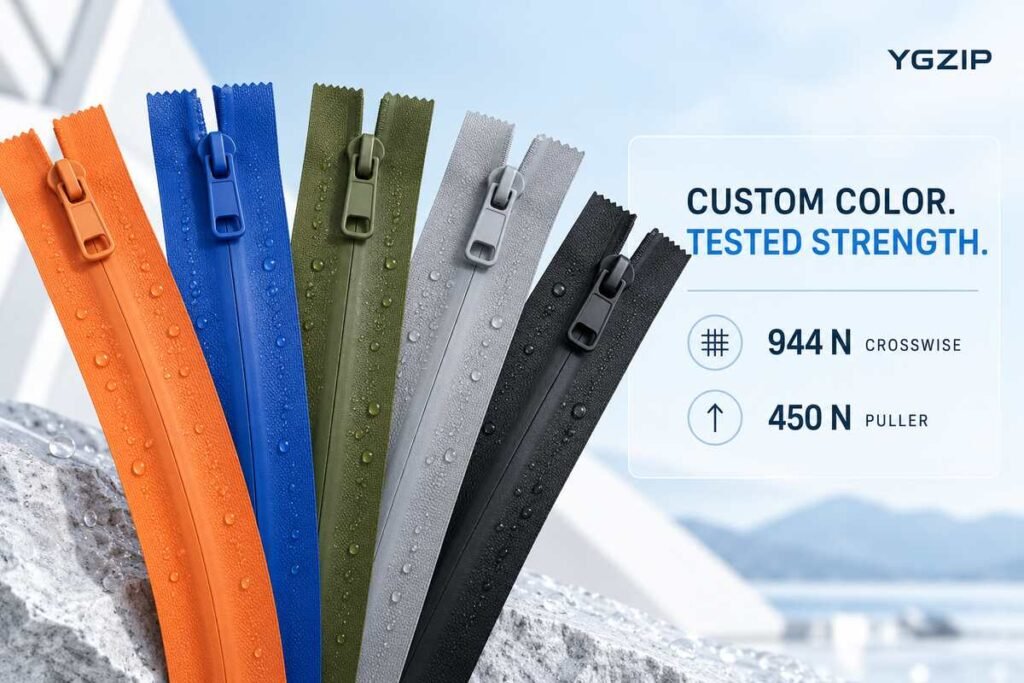
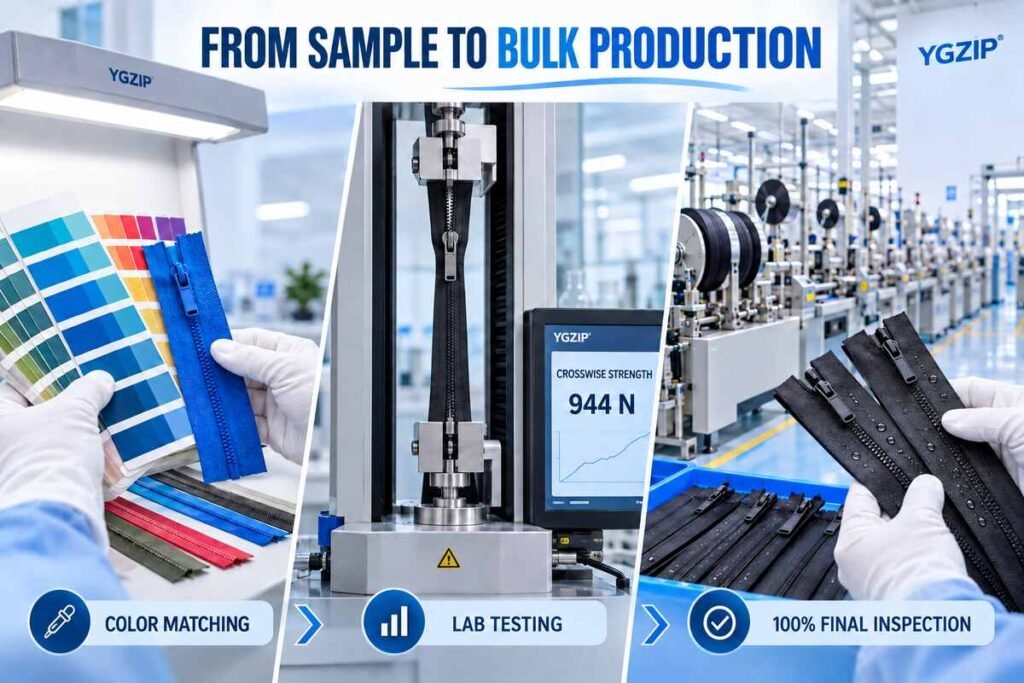
YGZIP combines custom color development, documented internal testing, automated production and 100% finished-zipper inspection for outdoor, luggage, mattress and technical-textile applications.
A coated zipper should do more than look waterproof.
It must coordinate with the fabric, move smoothly through the finished product, resist the loads created during use and remain consistent from approved sample to bulk production.
For a brand or product manufacturer, these requirements are connected. A zipper with the right color but the wrong chain, coating, slider or end configuration can still create leakage, jamming, chain separation, sewing problems or costly rework.
That is why YGZIP approaches a custom waterproof zipper as a complete closure system—not simply as black zipper chain with a surface film.
This report brings together three forms of evidence:
- Custom-colored water-repellent zipper development and recorded strength results
- In-house mechanical, colorfastness, corrosion and temperature testing
- Automatic production processes and 100% finished-zipper inspection before shipment
1.Custom-Colored Water-Repellent Zippers That Coordinate With the Fabric
Outdoor garments and technical textile products are increasingly designed as complete color systems. A standard black coated zipper may provide contrast, but it can also interrupt the visual language of a premium jacket, bag or equipment cover.
YGZIP can develop the zipper film, tape and selected slider finish according to:
- A customer-supplied Pantone color
- A customer-supplied YKK color reference
- A physical fabric swatch
- An approved zipper or trim sample
- A project-specific color target
The aim is not to claim that different materials become visually identical under every light source. The practical goal is to coordinate the zipper and fabric so that the finished product appears intentional and harmonious.
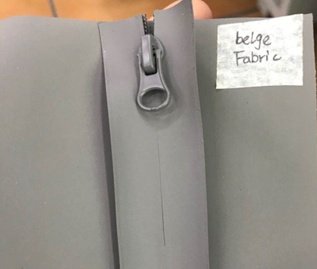
COLOR • STRENGTH • QUALITY CONTROL
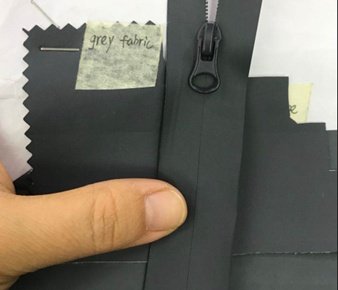
Color evaluation can be performed under the buyer’s specified light source. D65 artificial daylight is commonly used in our internal color-matching workflow when requested.
Why a Color Code Alone May Not Be Enough
The same nominal color can appear different on woven tape, PU or TPU film, molded components and painted metal surfaces. Gloss, texture, film thickness and viewing angle all influence the result.
For more reliable approval, buyers should provide:
- The required color code
- A physical fabric or approved trim reference when available
- The agreed viewing light source
- Acceptable shade tolerance
- Whether tape, coating and slider must be evaluated separately
- Final fabric construction and finishing method
This reduces the risk of approving a zipper in isolation and discovering a mismatch only after garment or bag assembly.
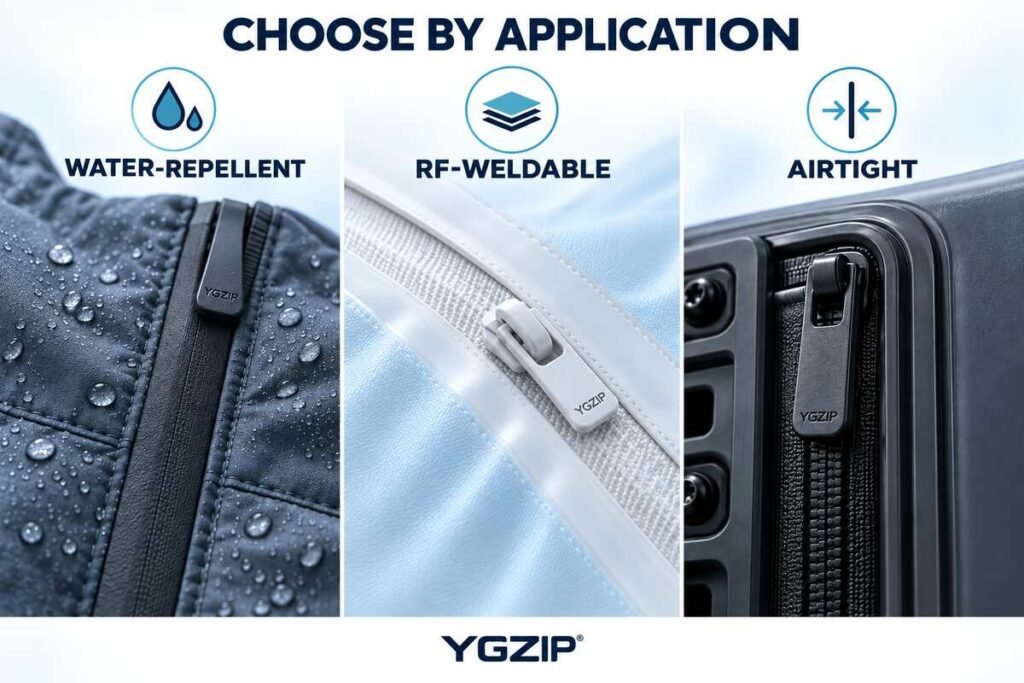
2.Water-Repellent, Weldable and Airtight Zippers Are Not the Same Product
In everyday sourcing language, many coated zippers are called “waterproof.” From an engineering perspective, the required sealing level must be defined more carefully.
| Zipper category | Primary purpose | Typical construction | Common applications |
|---|---|---|---|
| Water-repellent zipper | Reduce penetration from rain, splashes and surface moisture | Reverse-coil zipper with PU/TPU-type surface film or coating | Outdoor jackets, sportswear, backpacks, footwear and equipment covers |
| Weldable waterproof zipper system | Create a compatible joining surface for HF/RF welding or heat sealing | Coated zipper with compatible welding flange or added adhesive film | Medical mattress covers, protective covers and technical textile enclosures |
| Airtight zipper | Control air and water leakage under defined conditions | Specialized sealing film, precision chain and sealing-slider interface | Inflatable products, dry bags, protective equipment and sealed systems |
A water-repellent garment zipper should not automatically be described as airtight. Likewise, a coated zipper is not automatically compatible with the buyer’s HF/RF welding process.
Before sampling, confirm:
- Rain and splash resistance or full sealing?
- Sewn, taped, heat-sealed or HF/RF-welded construction?
- PU, PVC, TPU or another fabric coating?
- Required pressure, immersion or leakage test?
- Required flexibility and operating force?
- Cleaning chemicals and temperature exposure?
For a detailed comparison, read our guide to waterproof vs. airtight zippers.
3.Documented Strength Results for the Featured Colored Zipper Sample
Color customization should not replace mechanical performance.
In the recorded internal tests shown in Video 1, the featured colored water-repellent zipper sample produced the following results:
| Test item | Recorded internal result | Historical reference shown in the supplied BS 3084 table | Difference |
|---|---|---|---|
| Chain crosswise strength | 944 N | Code E: 470 N | +474 N; approximately 2.01 times the reference |
| Puller attachment strength | 450 N | Code E: 300 N | +150 N; approximately 1.50 times the reference |
What Chain Crosswise Strength Measures
The engaged zipper chain is pulled sideways, perpendicular to the direction in which the slider normally travels. This test helps evaluate resistance to chain separation when outward pressure acts across the closed zipper.
That type of load can occur when:
- A backpack is heavily packed
- A fitted cover is stretched around its contents
- A jacket is pulled across a curved or highly tensioned opening
- A bag is compressed during transport
- The zipper is sewn with uneven panel tension
What Puller Attachment Strength Measures
Puller attachment testing evaluates the connection between the slider body and the puller. This matters because users often apply extra force when operating a zipper with gloves, when fabric interferes with the slider or when the product is under tension.
Important BS 3084 and Test Limitation
The 470 N and 300 N figures above are historical Code E reference values shown in the table supplied for this project. BSI lists BS 3084:2006 as withdrawn on 7 August 2017. These comparisons therefore provide a familiar historical benchmark; they are not a declaration of current BS certification.
All recorded values relate to the individual samples, equipment and internal test conditions shown. They do not guarantee that every zipper size, coating, color or production batch will produce the same result.
Formal conformity must be evaluated using the buyer’s required current standard, conditioning procedure, sample quantity, test speed, clamp configuration and acceptance criteria.
YGZIP can prepare samples for testing under the customer’s specified protocol.
4.Inside the YGZIP In-House Zipper Testing Process
Mechanical strength is only one part of a reliable waterproof zipper specification.
Depending on the zipper type, order specification and end use, our internal evaluation process may include:
- D65 color matching and shade assessment
- Dry and wet rubbing colorfastness
- Reciprocating opening-and-closing durability
- Slider retention strength
- Chain crosswise strength
- Puller attachment strength
- Slider torsion resistance
- Corrosion or salt-spray evaluation
- 60°C washing colorfastness evaluation
- Dry-cleaning evaluation when specified
- Slider paint curing control
- Low-temperature evaluation down to −55°C for applicable projects
- Visual and operating inspection after testing
Recorded Examples From the Internal Laboratory Video
The second video documents separate internal test examples. These figures demonstrate the available inspection workflow and must not be treated as the specification for every colored waterproof zipper.
| Recorded test example | Internal result | Reference shown in supplied table |
|---|---|---|
| Slider retention strength | 99.8 N | Code D: 90 N |
| Chain lateral strength | 984.2 N | Code E: 470 N |
| Puller attachment strength | 547.7 N | Code E: 300 N |
5.From Automatic Production to 100% Finished-Zipper Inspection
Reliable sampling is only valuable when the approved construction can be reproduced consistently in bulk.
The third video shows key stages inside the YGZIP production workflow:
- Zipper assembly workshop overview
- Finished-zipper inspection area
- Temperature- and humidity-controlled slider storage
- Molded plastic zipper injection
- Ultrasonic U-type top-stop installation for nylon coil zippers
- Metal zipper bottom-stop production
- Automatic slider insertion for molded plastic zippers
- Automatic plastic-slider insertion for nylon coil zippers
- Automatic slider insertion for metal zippers
- Automatic gapping and sizing for finished lengths
- Finished-product and functional-zipper capability review
Automatic equipment supports repeatability, but it does not eliminate the need for human inspection.
After production, completed zippers undergo 100% finished-piece inspection before shipment. The applicable inspection points can include appearance, slider movement, end-component assembly, length, color and obvious functional defects.
Batch sampling and internal laboratory tests are then performed according to the zipper type, end use and approved order specification.
6.Custom Waterproof Zipper Configurations
YGZIP can develop zipper configurations according to the product rather than offering one generic solution for every application.
Nylon Coil Zippers
- Continuous chain and finished lengths
- Closed-end, open-end and two-way constructions
- Aluminum or injection-molded pin-box options
- Reverse-coil configurations
- Locking and non-locking sliders
- Custom pullers and colors
- Water-repellent film options
Molded Plastic Zippers
- Closed-end and open-end constructions
- One-way and two-way sliders
- X-type two-way open-end configurations
- O-type double-slider closed-end configurations
- Automatic slider insertion
- Custom tape, teeth and slider colors
Metal Zippers
- Closed-end and open-end constructions
- One-way and two-way configurations
- X-type and O-type options where technically applicable
- Custom finishes, sliders and pullers
- Application-specific corrosion evaluation
Functional Sealing Solutions
- Flexible water-repellent zippers for apparel and outdoor equipment
- Double water-repellent zipper systems for mattress covers
- HF/RF-weldable zipper constructions
- Waterproof zipper options for bags and protective covers
- Airtight zipper systems for defined sealing requirements
Explore our water-repellent zippers for outdoor gear and sportswear
or review the waterproof mattress zipper engineering guide.
7.Application-Based Selection Guide
| Finished product | Suggested starting point | Questions to confirm before sampling |
|---|---|---|
| Outdoor jacket or rainwear | Flexible No. 3 or No. 5 reverse-coil water-repellent zipper | Required color? Curved opening? One-way or two-way? Minimum temperature? |
| Backpack or travel bag | No. 5, No. 8 or No. 10 water-repellent construction | Packed load? Abrasion? Salt or rain exposure? Locking slider? |
| Tent or equipment cover | No. 8 or No. 10 continuous or finished zipper | Long zipper path? Replaceable slider? Sewing or welding? Wind and lateral load? |
| Footwear | No. 5 or No. 8 coated or reinforced zipper | Tight curve? Mud, chemicals or repeated flexing? Locking requirement? |
| Medical mattress cover | Sewn coated zipper or compatible HF/RF-weldable system | PU/PVC/TPU fabric? Laundry chemistry? Peel and leakage tests? |
| Dry bag or inflatable product | Application-specific airtight zipper | Pressure, immersion time and leakage limit? Joining process? Operating force? |
The same zipper size can perform differently depending on tape weave, coil or tooth geometry, slider tolerance, coating, end components and installation method.
The correct starting question is not “Which waterproof zipper is cheapest?”
It is:
Which closure structure matches the real water exposure, load, manufacturing process and failure risk of the finished product?
8.A Better Sample Starts With a Better Technical Brief
Before requesting a quotation, please provide:
- What is the finished product?
- Is the main requirement rain resistance, liquid sealing or airtightness?
- Which zipper type and size are currently used?
- Is the zipper sewn, seam-taped, heat-sealed or HF/RF welded?
- What is the fabric coating: PU, PVC, TPU or another material?
- Is the zipper path straight or curved?
- Is the required construction closed-end, open-end, continuous chain, X-type or O-type?
- Which slider, locking function and puller are required?
- Which Pantone, YKK color reference or physical fabric sample should be matched?
- What temperatures, chemicals, washing cycles, salt or UV exposure are expected?
- Which test standard and minimum acceptance values must be met?
- What is the estimated sample and bulk-order quantity?
With this information, we can recommend a relevant construction instead of quoting a generic coated zipper that may not work after assembly.
9.Why the Cost of Failure Matters More Than the Unit Price
A zipper is normally a small part of the complete product cost, but closure failure can create disproportionate consequences.
| Risk area | Generic sourcing approach | Application-engineered approach |
|---|---|---|
| Color coordination | Select from screen image only | Evaluate code, physical reference and agreed light source |
| Water protection | Assume every coated zipper is waterproof | Define rain, welding, immersion or pressure requirement |
| Mechanical strength | Rely on size number | Review chain, tape, slider and end-component performance |
| Manufacturing fit | Test after bulk purchase | Validate sewing or welding during sampling |
| Batch quality | Visual spot check only | Approved specification, 100% finished inspection and applicable batch tests |
| Failure cost | Rework, returns and warranty exposure | Reduce risk through pre-production validation |
The more relevant calculation is:
Zipper cost + assembly cost + rework exposure + replacement risk + customer confidence
10.OEM Development Support From YGZIP
YGZIP supports product developers, sourcing teams and manufacturers with:
- Application-based zipper selection
- Pantone and customer-reference color development
- D65 color assessment when specified
- Coating and film evaluation
- Continuous chain and finished-zipper production
- Closed-end, open-end, X-type and O-type configurations
- Slider, locking mechanism and puller selection
- Custom-logo puller development
- HF/RF-weldable zipper options
- Waterproof and airtight zipper development
- Internal mechanical and environmental testing
- Samples for sewing, welding and finished-product validation
- 100% finished-zipper inspection before shipment
- Batch control against the approved order specification
Our role is not to sell one “waterproof zipper” for every product.
Our role is to help define the right combination of tape, chain, film, slider, end structure and joining method for the buyer’s actual application.
Request a Custom Waterproof Zipper Sample
If you manufacture outdoor clothing, backpacks, luggage, footwear, tents, equipment covers, mattress covers, protective products or sealed textile systems, send us your project information.
Please include:
- Product application
- Zipper type and size
- Finished length or roll-chain requirement
- Closed-end, open-end or two-way structure
- Required color or reference sample
- Slider and puller requirements
- Sewing, heat-sealing or HF/RF-welding process
- Expected environmental exposure
- Required test standard
- Estimated order quantity
YGZIP will review the application and recommend a suitable starting sample for evaluation in your fabric and finished-product construction.
REQUEST WATERPROOF ZIPPER SAMPLES
Email: info@ygzip.com
WhatsApp: +86 134 2272 3523
Website: https://ygzip.com
Contact: YGZIP Engineering Team
Reliable waterproof products begin with a closure system defined for the real application—not with a generic coating description.
Can YGZIP match a waterproof zipper to a Pantone or YKK color reference?
Yes. YGZIP can develop tape, zipper film and selected slider finishes according to a customer-supplied Pantone code, YKK color reference or physical fabric sample. Final approval should be based on agreed samples and viewing conditions.
Is a water-repellent zipper completely waterproof?
Not necessarily. A water-repellent zipper is designed mainly to reduce penetration from rain, splashes and surface moisture. Full waterproof or airtight performance requires a defined sealing structure, joining method and test condition.
What do the 944 N and 450 N zipper test results represent?
No. The comparison uses Code E values shown in the supplied historical reference table. BSI lists BS 3084:2006 as withdrawn. Formal conformity must be evaluated against the buyer’s required current standard and test protocol.
Does YGZIP inspect every finished zipper before shipment?
Completed finished-length zippers undergo 100% finished-piece inspection before shipment. Applicable checks can include appearance, slider operation, length, color, end-component assembly and obvious functional defects. Laboratory sampling depends on the product and approved order specification.
Can the zipper be designed for HF or RF welding?
Yes. Weldable constructions can be evaluated for compatible PU, PVC or TPU-coated fabrics. The buyer should provide the fabric and welding parameters because bonding performance depends on both the zipper surface and the customer’s welding process.
When should I choose an airtight zipper?
Choose an airtight zipper when air, gas or pressure leakage is unacceptable, or when the product requires a defined immersion or pressure-retention result. Read our TPU airtight zipper sealing-system guide for more information.
Can I request zipper samples before bulk production?
Yes. Send YGZIP the application, zipper size, length, construction, color, slider, joining method, quantity and required tests. The zipper should be evaluated in the buyer’s actual fabric and finished-product geometry before bulk production.
